
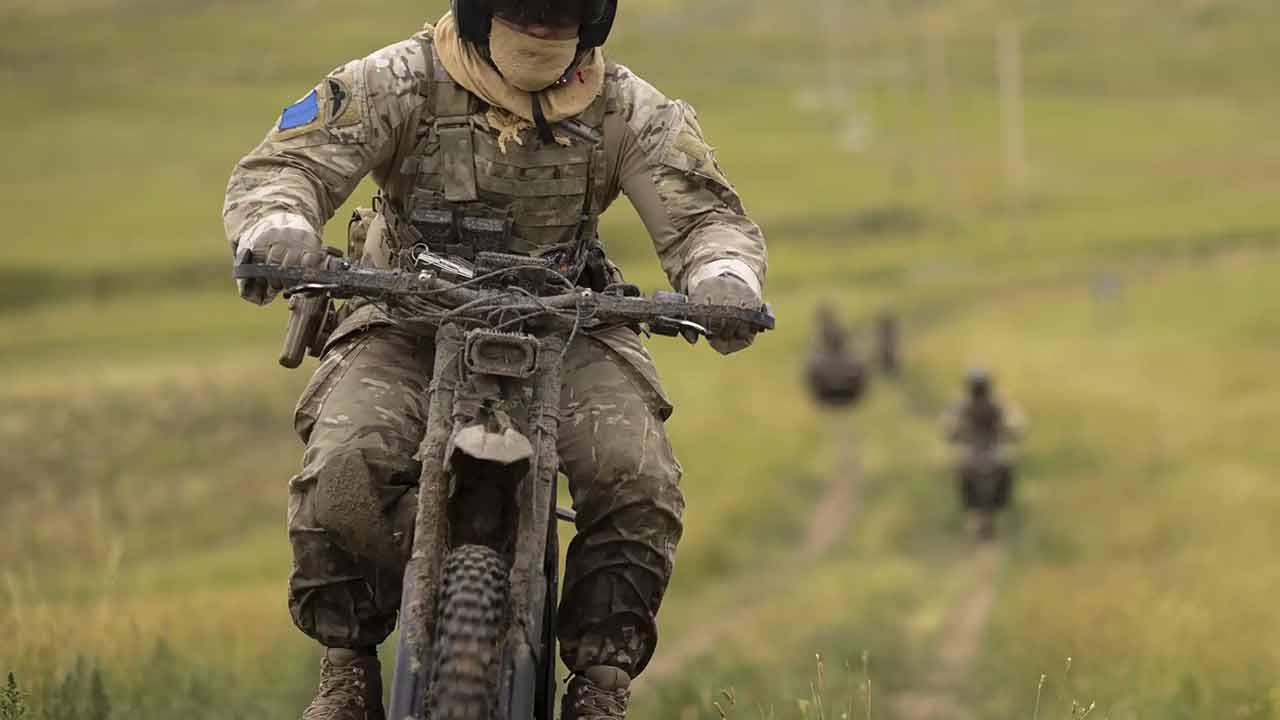
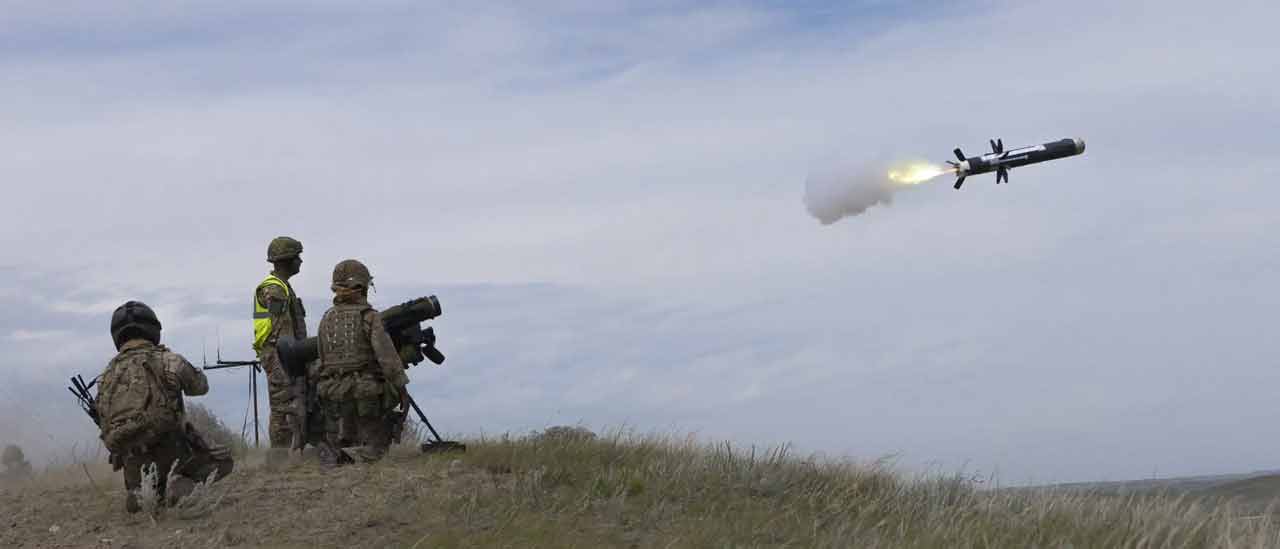
Paratroopers used electric motorcycles to transport teams armed with Javelin missiles during an exercise held on the Canadian plains
The British Army is evaluating the use of electric motorcycles as an alternative way to increase mobility and reduce the exposure of small infantry units in areas monitored by drones and electronic warfare sensors.
The initiative was tested by soldiers from the Anti-Tank Platoon of the 2nd Battalion, Parachute Regiment, known as 2 PARA, during Exercise Rhino Bizz, held at the British Army Training Unit Suffield, or BATUS, in Canada.
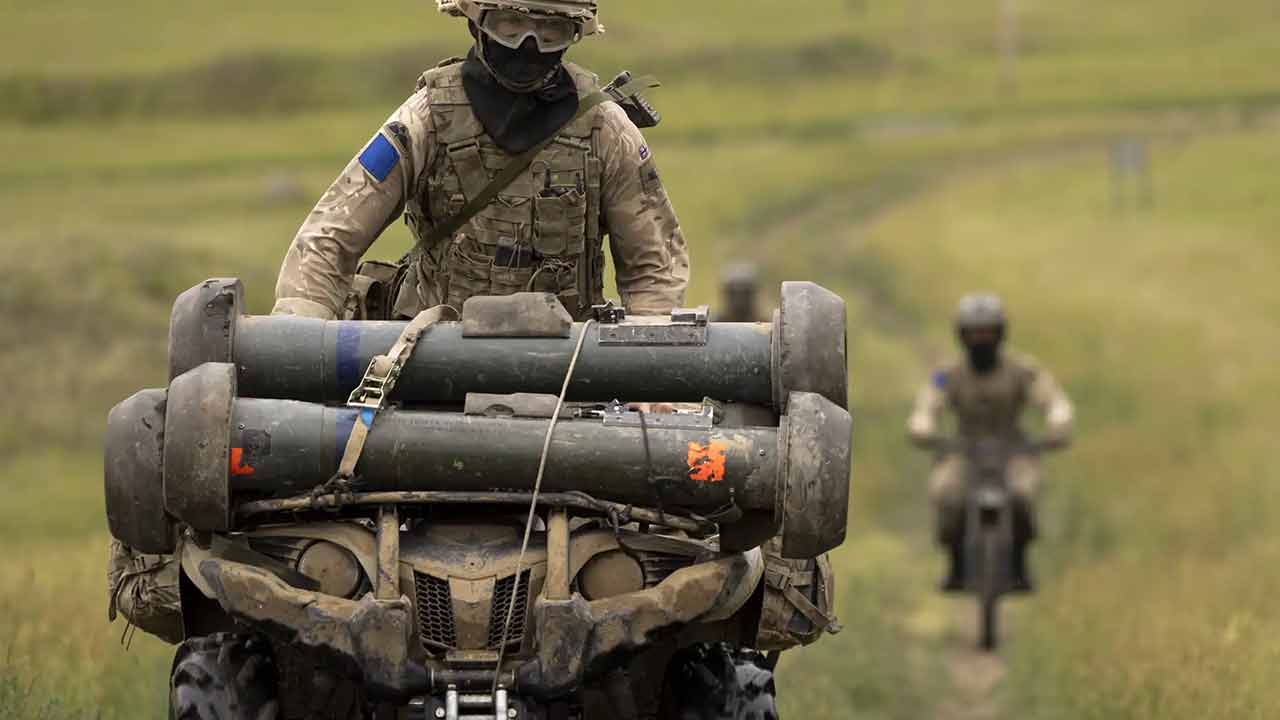
Equipped with Sting electric motorcycles, the paratroopers formed small mobile teams tasked with locating enemy positions, carrying out attacks from greater distances, and quickly leaving the area before a possible response.
The aim is not to replace conventional military vehicles, but to provide an intermediate option between moving on foot and using larger platforms, which are generally easier to detect by aerial, thermal, or electronic means.
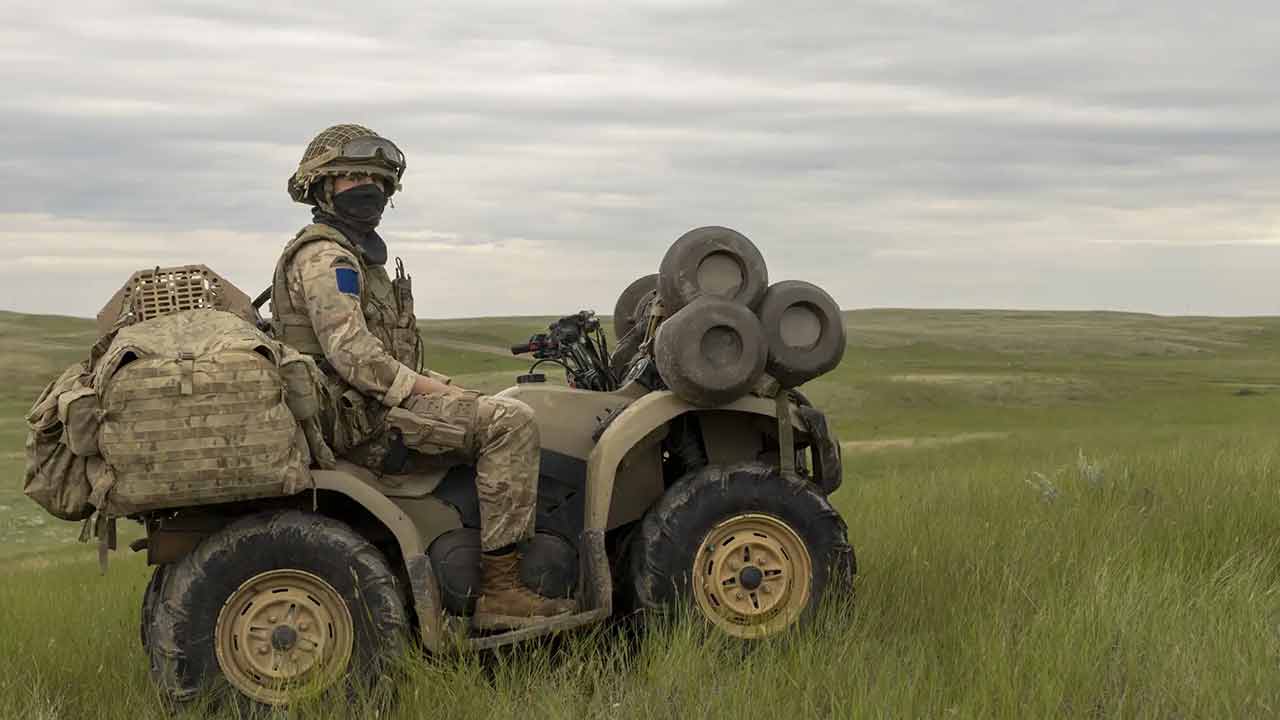
During a 96-hour simulated battle, drones and electronic warfare systems scanned the region’s vast plains to locate targets and transmit the information to the anti-tank teams.
The soldiers moved in groups of four electric motorcycles, supported by an all-terrain vehicle with a trailer used to carry missiles, ammunition, and additional batteries. This combination allowed the troops to remain mobile without having to carry all the heavy equipment individually.
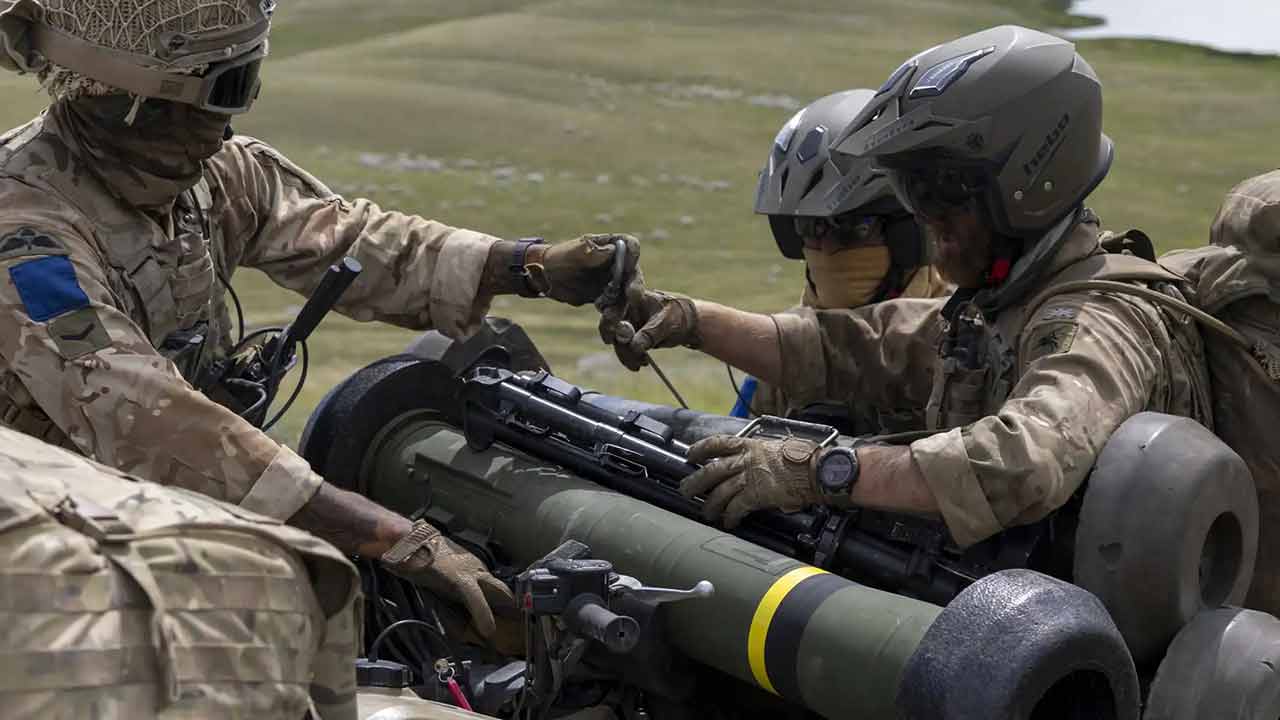
The weapons used included Javelin anti-tank missiles, which were employed against simulated armored vehicles. The teams also used munitions designed to breach structures, allowing Canadian troops to advance during an operation in an urban environment.
In another phase, all-terrain vehicles transported automatic grenade launchers to support positions, demonstrating how light vehicles can complement electric motorcycles when moving heavier weapons.
According to Warrant Officer Shaun Nicholls, the platoon’s deputy commander, the electric motorcycles increased both the paratroopers’ operational area and their ability to reposition.
“As light infantry, we traditionally operate on foot. With the electric motorcycles, we can cover greater distances more quickly and operate farther away from our own positions,” he explained.
Movement speed became especially important because of the constant presence of drones. After carrying out an action, the team must leave the position before enemy sensors identify its location and direct a response.
Although they are lightweight vehicles adapted for military use, the motorcycles offer advantages such as low noise levels, a reduced thermal signature, and ease of transport. On the other hand, their use depends on terrain conditions, battery availability, and the existence of suitable routes.
The British platoon has already been using the electric motorcycles in training for approximately one year. During this period, the soldiers have developed riding techniques, movement procedures, and methods for integrating the vehicles with other platforms used on the battlefield.
Tests conducted jointly with the Royal Air Force have also demonstrated that the motorcycles can be parachute-dropped, allowing them to reach the operational area alongside airborne troops.
The exercise in Canada served as a broader stage of this evaluation, providing space for long-distance movement and for integrating the teams with drones, reconnaissance sensors, and communication systems.
Rhino Bizz brought together members of the 16 Air Assault Brigade and Canadian military personnel in a scenario marked by the intensive use of unmanned systems and electronic warfare capabilities.
The troops also tested the concept known as “reconnaissance-strike,” which connects sensors, observation units, and support platforms in an artificial intelligence-assisted network. The goal is to reduce the interval between locating a target and the decision-making process of the units responsible for the response.
The British experience shows how infantry forces are seeking lighter and more dispersed solutions for operating in environments where larger vehicles can be quickly detected. Although electric motorcycles do not provide protection for their riders, they can increase the speed, range, and unpredictability of small specialized teams.
+ Two GlobalEye radar aircraft sold to an undisclosed Middle Eastern country
Source and images: British Army. This content was created with the help of AI and reviewed by the editorial team.
